
HEADACHE CARE
Headache care at our clinic
Medically reviewed by Koshiro Nishimoto, MD, PhD (Director)
Updated October 15, 2026

Types of headache
Headaches are broadly divided into primary headaches, in which the headache itself is the disorder, and secondary headaches, caused by another illness or injury.
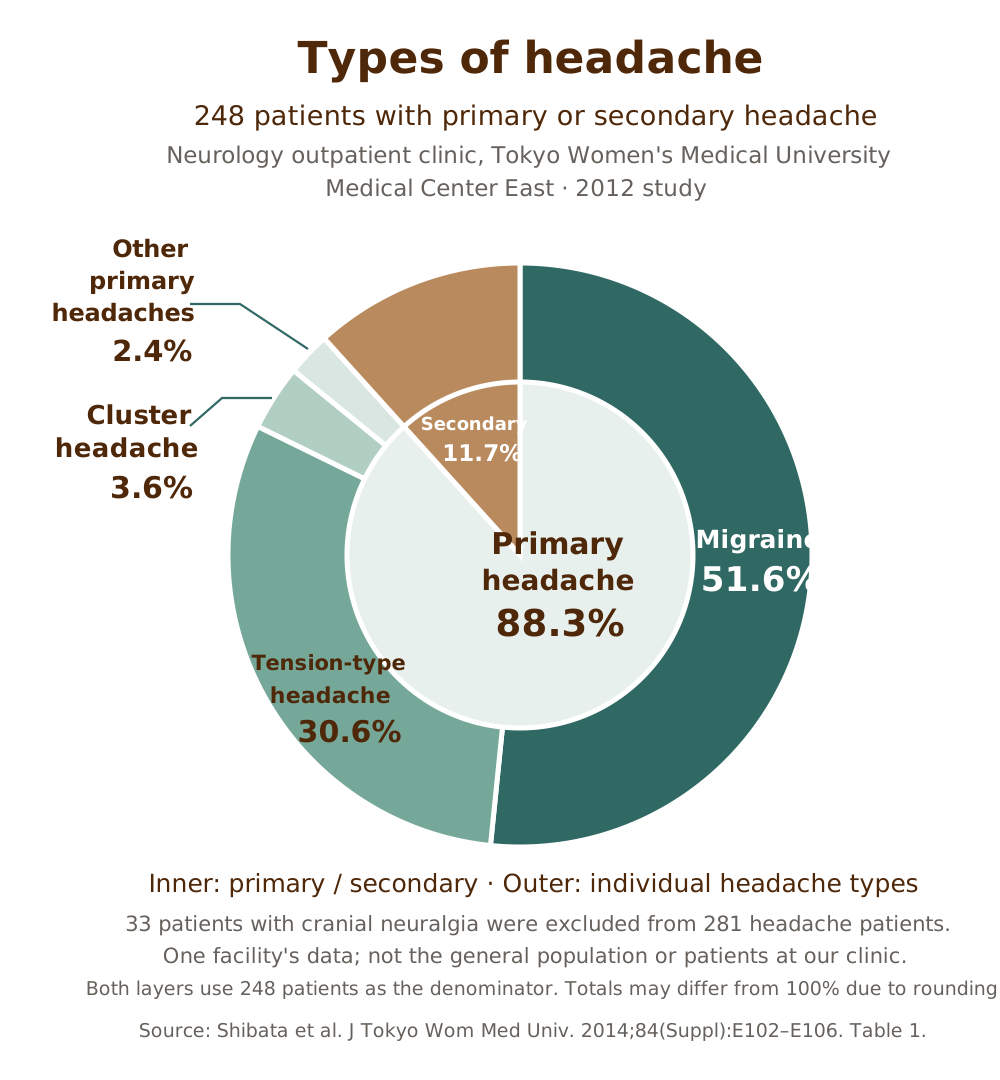
In this study, primary headaches accounted for 88.3% and secondary headaches for 11.7%. Migraine accounted for 51.6% of the total, or approximately half.
Checking for secondary headache
Secondary headaches can result from infections, head injuries or bleeding in the brain. We first assess for an underlying cause through a clinical examination and CT or other tests when indicated.
Japanese Clinical Practice Guideline for Headache 2021, CQ I-23 and VIII-4 (Japanese PDF)
Main types of primary headache
Migraine
Migraine can cause throbbing pain on one or both sides of the head. Movement may make it worse, and it may be accompanied by nausea or sensitivity to light and sound.
Tension-type headache
This typically causes a heavy, pressing or tightening pain on both sides of the head. Treatment may include pain relievers such as acetaminophen, together with headache exercises and relaxation. Preventive medication may be considered for frequent headaches.
Cluster headache
Cluster headache causes extremely severe pain behind one eye, often with redness or tearing. Attacks recur over a period of time. Acute treatment includes high-concentration oxygen or subcutaneous sumatriptan; verapamil and other medicines may be used for prevention.
Migraine self-check
When secondary headache is not suspected, we use a migraine screener to assess the possibility of migraine and make a diagnosis together with the symptoms and their course.
Think about your headaches over the past 3 months. Choose how often each statement applied to you.
Migraine treatment with rimegepant
For patients diagnosed with migraine, we offer Nurtec OD (rimegepant) as a treatment option. Nurtec is an oral medicine that blocks the receptor for CGRP, a neuropeptide involved in migraine pain. It suppresses pain signalling mediated by CGRP and is used to treat and prevent migraine attacks.
Japanese Headache Society, new CGRP-related migraine treatments, CQ-10 (Japanese PDF)